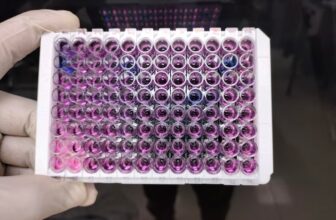
When you investigate changes in cellular signaling, you may notice something unexpected: phosphorylation patterns change even though total protein levels remain relatively constant. This happens because protein phosphorylation regulates protein activity, interactions, localization, and signaling responses without necessarily changing how much protein your cells produce.
Understanding this difference helps you interpret experimental results more accurately. Instead of assuming that stable protein expression means stable biological activity, you need to examine both total protein abundance and phosphorylation status. Western blotting provides a practical way to investigate these changes and identify modifications associated with cellular responses.
Understanding Protein Phosphorylation and Its Role in Cell Signaling
Protein phosphorylation is a reversible post-translational modification in which enzymes called kinases attach phosphate groups to specific amino acid residues, commonly serine, threonine, and tyrosine.
Phosphatases reverse this process by removing phosphate groups. The balance between kinase and phosphatase activity determines the phosphorylation state of individual proteins.
When this balance changes, you may observe different phosphorylation signals without detecting any significant variation in total protein abundance.
For example, a signaling protein may become highly phosphorylated after cellular stimulation. Its overall concentration can remain unchanged, but its activity, binding partners, or intracellular location may change considerably.
This distinction is essential when studying cellular pathways, protein regulation, and biological responses.
5 Reasons Phosphorylation Patterns Change Without Changing Total Protein Levels
1. Changes in Kinase Activity
Kinases regulate phosphorylation by transferring phosphate groups to specific protein residues. When cellular conditions activate or inhibit particular kinases, phosphorylation levels can change rapidly.
You might observe stronger phosphorylation signals following growth factor stimulation, stress responses, or receptor activation.
However, these changes do not necessarily indicate increased protein production. Instead, they reflect changes in the regulatory activity of existing proteins.
2. Increased or Reduced Phosphatase Activity
Phosphatases remove phosphate groups from proteins and help maintain signaling balance.
If phosphatase activity increases, phosphorylation signals may decrease even when total protein abundance remains stable. Conversely, reduced phosphatase activity can lead to greater phosphorylation.
Therefore, when you investigate unexpected phosphorylation changes, consider both kinase and phosphatase activity rather than focusing exclusively on protein expression.
3. Cellular Stimulation and Environmental Conditions
Cells continuously respond to their surroundings. Changes in nutrient availability, temperature, growth factors, oxidative stress, and other environmental conditions can influence phosphorylation pathways.
These signals may produce rapid changes in protein modification before any measurable changes in total protein concentration occur.
For example, a protein involved in cellular stress signaling may become phosphorylated shortly after stimulation. Its abundance may remain constant while its biological function changes.
4. Changes in Protein Localization and Interactions
Phosphorylation can influence where proteins operate inside cells and which molecules they interact with.
A phosphorylation event may promote protein movement between cellular compartments or change its ability to bind another protein.
Consequently, you may detect different phosphorylation patterns even though the total amount of the target protein remains unchanged.
These regulatory changes are particularly important when investigating complex signaling networks.
5. Protein Turnover and Regulatory Compensation
Protein synthesis and degradation can occur alongside phosphorylation changes.
In some situations, cellular mechanisms maintain relatively stable total protein levels despite changes in protein turnover. Meanwhile, the proportion of phosphorylated protein may increase or decrease.
This creates an important distinction between protein abundance and protein modification.
How Western Blotting Helps Identify Phosphorylation Changes
To understand these differences, you should evaluate phosphorylation-specific signals alongside total protein measurements.
Western blotting allows you to examine proteins separated by molecular weight and detect specific targets using antibodies.
For phosphorylation studies, you can use antibodies that recognize particular phosphorylated residues, including phosphoserine and phosphothreonine.
Comparing phosphorylated protein signals with total protein measurements helps you determine whether an observed difference reflects altered phosphorylation or a change in overall protein abundance.
For reliable interpretation, consider these practical steps:
Use matched samples: Compare control and treated samples prepared under consistent experimental conditions.
Measure total protein: Confirm whether the overall abundance of your target remains stable.
Use phosphorylation-specific antibodies: Select antibodies appropriate for the phosphorylation site being investigated.
Protect phosphorylation during preparation: Use suitable phosphatase inhibitors and follow consistent sample-handling procedures.
Maintain consistent loading: Apply comparable protein quantities across experimental lanes.
Evaluate signal quality: Check antibody specificity, background staining, and detection linearity.
These practices help you distinguish genuine phosphorylation changes from technical variation.
Why Phosphorylation-Specific Western Blot Analysis Matters
If you rely only on total protein measurements, you may overlook important regulatory events.
For example, two experimental samples can contain similar amounts of a signaling protein but display substantially different phosphorylation levels. This difference may indicate that the pathway is activated in one condition and suppressed in another.
Investigating Western Blot Phosphorylated Proteins for serine and threonine signaling analysis helps you examine these modifications more directly.
Kendrick Labs, Inc. provides specialized protein analysis and Western blotting expertise to support investigations involving protein modifications and complex protein patterns.
By evaluating phosphorylation-specific signals alongside total protein measurements, you can develop a clearer understanding of protein regulation and experimental outcomes.
Common Challenges When Interpreting Phosphorylation Results
Even when your experimental design is appropriate, several factors can complicate interpretation.
Antibody specificity is particularly important because an antibody may recognize unintended proteins or produce background signals. Differences in sample preparation can also affect phosphorylation stability.
Additionally, phosphorylation is dynamic. If you collect samples at different time points, you may capture different stages of the same signaling response.
To improve reproducibility, establish consistent collection times, sample-processing conditions, antibody concentrations, and detection procedures.
You should also avoid interpreting a stronger phosphorylation band as definitive evidence of pathway activation without considering the specific protein, phosphorylation site, and biological context.
Conclusion
Phosphorylation patterns can change without altering total protein levels because phosphorylation regulates protein function rather than necessarily controlling protein abundance.
Changes in kinase activity, phosphatase activity, cellular stimulation, protein localization, and turnover can all influence phosphorylation states.
When you compare phosphorylation-specific signals with total protein measurements, you gain a more complete understanding of cellular signaling and protein regulation.
For specialized support with protein modification studies, explore the protein analysis capabilities at Kendrick Labs, Inc. and choose an analytical approach that supports your research objectives.
Frequently Asked Questions
Why does phosphorylation change without changing total protein expression?
Phosphorylation changes because kinases add phosphate groups and phosphatases remove them. These processes modify existing proteins without necessarily changing their overall abundance.
Does increased phosphorylation always mean increased protein activity?
No. Phosphorylation can activate or inhibit protein activity depending on the protein and the specific phosphorylation site. You should interpret each modification within its biological context.
How can you distinguish phosphorylation changes from protein expression changes?
Compare phosphorylation-specific Western blot signals with total protein measurements. If total protein remains stable while the phosphorylation signal changes, the difference may reflect altered phosphorylation status.
Which amino acids are commonly involved in protein phosphorylation?
Serine, threonine, and tyrosine are the most commonly studied phosphorylation sites in cellular signaling research.
Why are phosphatase inhibitors important during sample preparation?
Phosphatase inhibitors help prevent the removal of phosphate groups during sample preparation. This preserves phosphorylation states and improves the reliability of downstream analysis.
Can Western blotting detect changes in phosphorylation patterns?
Yes. Western blotting with phosphorylation-specific antibodies can detect changes in particular phosphorylated protein forms. You can compare these signals with total protein measurements to investigate changes in phosphorylation independently of overall protein abundance.
When should you consider specialized phosphorylation analysis?
Consider specialized analysis when you need to investigate unexpected phosphorylation patterns, compare signaling responses, evaluate protein modifications, or improve confidence in your experimental findings.
For professional assistance with phosphorylated protein analysis and Western blot characterization, Contact us today to discuss your research requirements with Kendrick Labs, Inc.