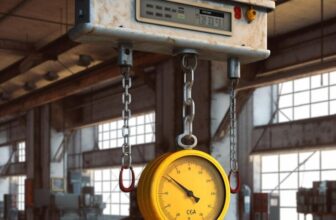
If your Houston facility depends on accurate weighing, scale performance is more than a routine maintenance concern. It can affect production, inventory control, billing, quality, safety, compliance, and customer satisfaction. Choosing the right Houston scale company means looking beyond equipment sales and considering the full lifecycle of your weighing systems.
For industrial operations, the most valuable scale services typically include calibration, preventive maintenance, repair, inspections, equipment selection, and specialized support for critical components. The right combination helps you keep measurements dependable while reducing avoidable downtime.
1. Scale Calibration Keeps Your Measurements Trustworthy
Calibration should be one of your highest priorities if your facility relies on scales for production, shipping, receiving, batching, or inventory management.
Over time, vibration, heavy use, environmental conditions, component wear, and accidental impacts can affect scale accuracy. Even a small measurement error can become expensive when repeated across thousands of transactions or production cycles.
Professional calibration verifies scale performance against appropriate reference standards and identifies whether your equipment is operating within required tolerances. Industrial Scale & Measurement provides Houston calibration services for scales and other measurement equipment, including on-site options designed to reduce operational disruption.
You should establish calibration intervals based on equipment usage, operating conditions, manufacturer recommendations, quality requirements, and applicable regulations rather than waiting for inaccurate readings to become obvious.
2. Preventive Maintenance Helps You Avoid Unexpected Downtime
Waiting until a scale stops working can turn a manageable maintenance issue into an operational emergency.
Preventive maintenance gives you an opportunity to identify worn components, damaged cables, unstable readings, mechanical problems, and other developing issues before they interrupt production. It can also help extend equipment life and reduce the frequency of emergency repairs.
A useful maintenance program should account for:
- Scale type and capacity
- Frequency of use
- Environmental exposure
- Load patterns
- Previous failures
- Criticality to production
- Calibration history
A qualified Houston scale company can help you build a service schedule around your facility instead of relying on a generic maintenance calendar.
3. Fast Scale Repair Protects Your Productivity
When a production or shipping scale fails, every hour of downtime can create additional costs. Your employees may have to use manual processes, production may slow, shipments can be delayed, and inaccurate measurements may create further problems.
Professional industrial scale repair services can address problems involving indicators, wiring, load cells, junction boxes, mechanical components, and other weighing-system parts. Industrial Scale & Measurement also provides on-site repair services intended to restore equipment while minimizing disruption.
You should contact a service provider promptly if you notice:
- Weight readings that fluctuate unexpectedly
- Zero-point drift
- Failed calibration checks
- Damaged cables or components
- Display or indicator problems
- Unusual mechanical movement
- Significant differences between repeated measurements
Don’t continue relying on questionable measurements simply because the scale still produces a number.
4. Load Cell Services Matter for System Accuracy
Load cells are fundamental components of many industrial weighing systems. If a load cell becomes damaged, overloaded, contaminated, or improperly calibrated, the entire system can produce unreliable results.
For facilities using heavy-duty platforms, tanks, hoppers, truck scales, or specialized weighing equipment, load cell testing and calibration can therefore be an important part of your service strategy.
Industrial Scale & Measurement offers load cell calibration services with on-site and laboratory capabilities and ISO/IEC 17025 accreditation.
Including load cell inspection in your maintenance program can help you identify problems before they compromise larger weighing systems.
5. Truck Scale Services Are Critical for High-Volume Facilities
If your operation receives or ships materials by truck, your truck scale can become one of the most commercially important pieces of measurement equipment on your site.
Accurate truck weighing supports inventory management, freight transactions, material tracking, and operational control. Your service program should cover more than occasional repairs.
Look for support that includes:
- Installation and equipment selection
- Calibration
- Preventive maintenance
- Inspections
- Troubleshooting
- Repairs
- Component evaluation
Industrial Scale & Measurement provides truck scale solutions in Houston for industries including transportation, logistics, agriculture, and construction.
6. Equipment Selection Helps You Avoid the Wrong Investment
Not every facility needs the same weighing system. Your application determines the appropriate capacity, platform size, accuracy requirements, environmental protection, connectivity, and construction.
Before purchasing a scale, consider what you are weighing, how frequently you are weighing it, the operating environment, expected loads, available space, and how measurement data will be used.
Working with a service provider that understands both equipment and maintenance can help you select a system that fits your operation rather than choosing equipment based solely on its purchase price.
7. Documentation Supports Quality and Compliance
Calibration certificates, service records, inspection results, and repair documentation can become valuable during internal reviews, customer audits, and regulatory inspections.
A strong measurement program should allow you to answer basic questions quickly:
- When was this scale last calibrated?
- What were the calibration results?
- Was any adjustment performed?
- When was it repaired?
- Which components were replaced?
- When is its next service due?
Industrial Scale & Measurement states that its calibration work can include traceable documentation and support for quality systems such as ISO/IEC 17025 and ISO 9001.
Keeping these records organized also makes it easier for you to identify recurring failures and make better replacement decisions.
How to Choose the Right Houston Scale Company
Your ideal provider should offer more than one isolated service. Look for a company that can support your equipment throughout its operating life—from selection and installation through calibration, maintenance, troubleshooting, and repair.
Industrial Scale & Measurement has provided scale and measurement services for more than six decades and offers scale sales, rentals, calibration, repair, maintenance, and related measurement services.
The best approach is to evaluate your current weighing equipment and identify which systems are most critical to production, safety, revenue, and compliance. Then establish service intervals based on actual operating conditions.
Need help evaluating your industrial weighing equipment? Contact Industrial Scale & Measurement to discuss calibration, repair, preventive maintenance, truck scales, or other measurement requirements. A proactive service plan can help you maintain accurate measurements, reduce unexpected downtime, and keep your Houston operation running reliably.
Frequently Asked Questions
1. What is the most important scale service for an industrial facility?
Calibration is one of the most important services because it verifies measurement accuracy. However, your facility may also need preventive maintenance, inspections, repairs, and component testing depending on equipment type, usage, environmental conditions, and compliance requirements.
2. How often should industrial scales be calibrated?
Calibration frequency depends on usage, equipment type, operating conditions, manufacturer recommendations, industry requirements, and your quality program. High-use or critical scales may require more frequent verification than equipment used occasionally.
3. When should you repair instead of replace a scale?
Repair may make sense when the underlying equipment remains structurally sound and the problem involves serviceable components. Replacement may be more practical when equipment is obsolete, repeatedly failing, severely damaged, or no longer meets operational requirements.
4. Do Houston industrial facilities need on-site scale service?
On-site service can be valuable when equipment is large, difficult to transport, or essential to daily operations. It can reduce equipment handling and help minimize downtime while technicians diagnose, calibrate, or repair the system at your facility.
5. Why are load cells important to industrial scales?
Load cells convert applied force into an electrical signal that the weighing system uses to determine weight. Damaged, overloaded, or poorly calibrated load cells can therefore affect the accuracy and reliability of the entire weighing system.