When you handle chemicals in a laboratory, choosing the right fume hood is essential for protecting personnel, maintaining a controlled working environment, and supporting safe experimental procedures. The correct specification depends on the chemicals you use, the hazards they present, your workflow, and your facility’s ventilation capabilities. By evaluating these factors before purchasing equipment, you can select a laboratory fume hood that meets your operational requirements without compromising safety or efficiency.
Identify the Chemicals and Hazards in Your Workflow
Start by documenting the chemicals you handle, their quantities, and the procedures you perform. Solvents, acids, bases, and other hazardous substances can produce vapors, gases, aerosols, or fumes that require appropriate containment.
Review each chemical’s Safety Data Sheet (SDS) to understand its exposure risks, compatibility requirements, and recommended handling precautions. Consider whether your work involves heating, mixing, transferring, weighing, or reacting chemicals, because these activities can affect the level of containment required.
Pay particular attention to:
Chemical properties: Determine whether substances are volatile, corrosive, toxic, or reactive.
Process temperature: Heated chemicals may release vapors more rapidly than substances handled at room temperature.
Chemical quantities: Larger volumes or higher concentrations may increase the potential exposure risk.
Work frequency: Routine procedures may require different workspace arrangements from occasional experiments.
This assessment gives you a practical foundation for specifying a hood that suits your actual chemical-handling needs.
Choose the Appropriate Fume Hood Type
Not every fume hood is suitable for every chemical application. Your selection should reflect the hazards, required containment, and ventilation arrangements in your facility.
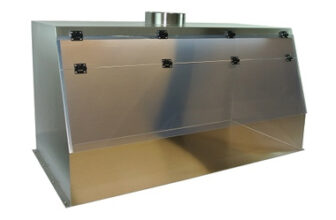
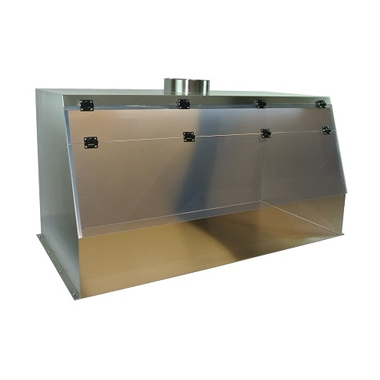
A conventional ducted fume hood exhausts contaminated air through a connected ventilation system. It is often suitable for chemical procedures that require the removal of hazardous vapors from the laboratory. However, its effectiveness depends on proper installation, airflow design, and regular performance verification.
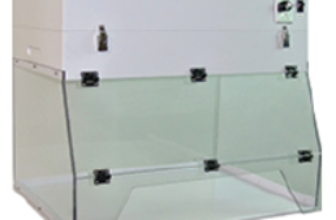
A ductless fume hood uses filtration to capture or adsorb specific contaminants before returning filtered air to the workspace. Its suitability depends on the chemicals involved, filter compatibility, breakthrough monitoring, and manufacturer guidance. It should not be assumed suitable for every chemical or process.
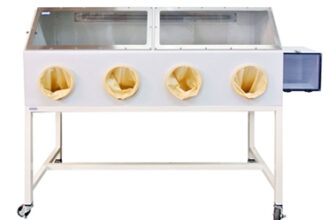
When comparing options, explore laboratory fume hoods for chemical vapor containment and safe laboratory handling. Review each model’s intended application, construction, airflow requirements, and available safety features before making a decision.
Specify Face Velocity and Airflow Requirements
Airflow is one of the most important considerations when specifying a laboratory fume hood. Face velocity refers to the average air speed measured across the hood opening. Appropriate airflow helps control the movement of contaminants into the hood and away from the user’s breathing zone.
However, higher face velocity does not automatically mean better protection. Excessive or turbulent airflow can interfere with containment, while insufficient airflow may allow hazardous contaminants to escape.
To establish suitable requirements, consider:
- The hood manufacturer’s tested performance specifications.
- Applicable safety standards and institutional requirements.
- The intended sash opening during routine work.
- The laboratory’s exhaust capacity and make-up air supply.
- The effects of nearby doors, supply vents, and personnel movement.
Specify the required operating conditions and ask for documented performance testing. Include airflow alarms or monitoring systems where appropriate. After installation, verify performance under actual operating conditions rather than relying solely on a nominal airflow value.
Select the Right Materials, Dimensions, and Features
Your hood’s construction must withstand the chemicals and procedures performed inside it. Chemical-resistant liners, work surfaces, sash materials, and internal components help support durability and reduce the risk of damage.
For corrosive chemicals, confirm that the interior surfaces and fixtures are compatible with the substances used. If your work involves heat, specialized equipment, or frequent chemical transfers, check the hood’s temperature limitations, workspace capacity, and utility connections.
Measure the available installation area and consider the equipment that must fit inside the hood. A workspace that is too small can encourage overcrowding, disrupt airflow, and make procedures harder to perform safely.
Useful specification points include:
- Internal working width, depth, and height.
- Sash design and maximum operating opening.
- Chemical-resistant interior and worktop materials.
- Electrical outlets, plumbing, and other required utilities.
- Lighting, airflow indicators, and alarm systems.
- Accessibility for cleaning, maintenance, and inspection.
Choose features based on documented hazards and practical requirements instead of adding accessories that your workflow does not need.
Check Installation, Compliance, and Maintenance Requirements
A suitable hood must work effectively as part of the laboratory’s overall ventilation system. Before ordering, confirm that your facility can support the required exhaust volume, duct configuration, electrical supply, and installation clearances.
Consult qualified ventilation professionals and your organization’s environmental health and safety team to establish applicable requirements. Depending on your location and application, relevant guidance may include ANSI/ASSP Z9.5, the applicable provisions of OSHA regulations, and local building and mechanical codes. Confirm the current requirements for your facility rather than assuming one standard applies universally.
Plan for commissioning, periodic containment testing, airflow verification, filter replacement where applicable, and preventive maintenance. Establish who will inspect alarms, document test results, and respond when performance falls outside the approved operating range.
Before accepting the equipment, confirm that installation and performance documentation meets your facility’s requirements and that users receive appropriate operating instructions.
Finalize Your Specification Before Purchasing
Create a written specification that summarizes your chemical hazards, hood type, dimensions, airflow requirements, materials, accessories, installation conditions, and maintenance expectations. This helps you compare models consistently and reduces the likelihood of overlooking an important safety requirement.
Request technical documentation covering intended applications, tested containment performance, utility requirements, maintenance intervals, and available support. Compare the total cost of ownership, including installation, ventilation energy, consumables, servicing, and testing—not just the initial purchase price.
For equipment options and product information, visit Global Lab Supply for laboratory fume hoods and chemical-handling equipment. If you need help evaluating suitable configurations, contact the laboratory equipment team for fume hood selection assistance.
The best specification is one that matches your chemical hazards, supports your daily procedures, and integrates reliably with your laboratory’s safety systems.
Frequently Asked Questions
1. What should you consider first when specifying a laboratory fume hood?
Begin with a chemical hazard assessment. Identify the substances, quantities, temperatures, and procedures involved, then determine the necessary containment, ventilation, and material compatibility requirements.
2. What is the ideal face velocity for a laboratory fume hood?
There is no single ideal value for every application. Follow the hood’s tested performance specifications, applicable standards, and institutional requirements, and verify containment at the intended sash opening.
3. Should you choose a ducted or ductless fume hood?
Choose a ducted hood when your process requires contaminants to be exhausted from the building. Consider a ductless model only when its filtration system is demonstrably suitable for the chemicals, concentrations, and procedures involved.
4. Which materials are best for chemical-handling fume hoods?
The appropriate materials depend on chemical compatibility, temperature, and cleaning procedures. Confirm that the liner, work surface, sash, and internal fixtures can withstand the substances used in your laboratory.
5. How often should you test a laboratory fume hood?
Follow applicable regulations, institutional procedures, and manufacturer recommendations for inspection and performance testing. Verify airflow and containment during commissioning and conduct subsequent checks at the required intervals or whenever performance concerns arise.